Save to shopping list
Create a new shopping list
24h | Wysyłka jeszcze dziś
Szukaj
Find the perfect toy in seconds!

Toys for kids 1+

(87)

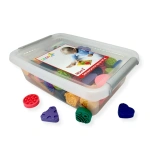
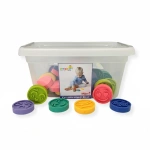
An interesting idea for creative fun with younger children over the age of one year, there are certainly all sorts of blocks. Children need our involvement, attention and care from an early age. In learning about the world, the following will be helpful educational blocks, which through their shapes, colors and texture will stimulate tiny hands. The best toys for toddlers are those that will not only provide entertainment, but create opportunities to develop important skills. When choosing blocks for toddlers, one should be guided primarily by such criteria as size of individual elements and the quality of the material they are made of.

What to look for when choosing toys for younger children?

The appropriate size of the pieces is most important, as it will exclude possible swallowing or choking. Young children as they are known to test toys in different ways, tasting everything that comes into little hands. In view of this, it is necessary to ensure that they play safely in the first place. Children around 1. year old intensively develop their manual skills. With great curiosity learn about shapes, texture or state of aggregation.

Safety and degree of difficulty of blocks for toddlers

Looking for the perfect blocks for the youngest children, it is worth taking into account the degree of difficulty and pay attention to the posted information. Safety of use of such creative toys must come first in their selection. In our offer we have products only reputable manufacturers and their quality is confirmed by international tests and certificates.

Toys for toddlers above the first year of life are not only blocks, but a whole range of products to stimulate sensory and motor development. At this age, a child intensely learns about the world through touch, sight and hearing, so the ideal toys are those that engage multiple senses simultaneously. Shape sorters teaches the recognition of forms and colors, while improving the precision of hand movements. Touch books with different textures and sounds fascinate the toddler and encourage exploration. Simple musical instruments - rattles, tambourines or cymbals - introduce the child to the world of sounds and rhythm.

Pull and push toys is an excellent option for children learning to walk - strollers, horses on wheels or colorful trains motivate movement and promote balance development. For toddlers who enjoy physical activity, the ideal choice will be sensory balls of different textures and sizes or the first tunnels and tents to play hide and seek.

Choosing toys for a one-year-old child, always keep safety in mind - all items must be large enough to make it impossible to swallow them. It is worth noting ease of cleaning, because toddlers' toys often end up in their mouths. Educational toys for the youngest should "grow" with the child, offering new opportunities for play as the child's skills develop. The best products are those that entertain and teach at the same time, supporting the key stages of your toddler's development in a fun and friendly way. In our store you will find only carefully selected toys meeting the highest safety standards, made of durable and child-friendly materials.
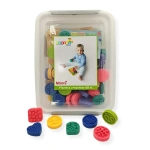
Educational blocks are specially designed developmental toys, which support the all-round development of the young child through play.

This category includes:
- Blocks of various shapes, sizes and colors
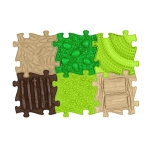
- Sensory blocks with different textures and structures
- Blocks with letters, numbers or pictures
- Magnetic blocks or blocks with a bonding system
- Soft blocks, foam or made of natural materials
- Shape sorters that work on the principle of blocks

The key benefits of playing with blocks are:
- Small motor development - grasping, stacking and manipulating blocks refines manual dexterity
- Cognitive stimulation - recognition of shapes, colors and patterns supports the development of thinking
- Creativity support - possibility to create your own constructions develops spatial imagination
- Learning to solve problems - matching and stacking blocks teaches logical thinking
- Development of eye-hand coordination - connecting what the child sees with precise hand movements

Each block is not only a toy for the toddler, but a valuable cognitive tool that stimulates the harmonious development of many skills simultaneously.

Educational toys have comprehensive impact on sensory and motor development child:

- Sensory development:
- Stimulation of touch through a variety of textures and materials
- Color and contrast recognition to support visual development
- Sound toys to develop auditory perception
- Learning about different shapes and spatial forms
- Experiencing different weights and physical properties of objects

- Small motor development:
- Improve grip and precision of finger movements
- Exercise coordination of both hands
- Learning how to release objects in a controlled manner
- Developing manipulative skills
- Preparing hands for future self-care activities

- Development of large motor skills:
- Toys that encourage movement (pushers, pullers)
- Learning balance and coordination of the whole body
- Strengthening the muscles of the whole body during activity
- Developing spatial awareness

- Sensory integration:
- Combining visual, tactile and auditory stimuli
- Building neural connections between different areas of the brain
- Formation of correct responses to sensory stimuli

Properly selected educational toys create a rich sensory environment, which is the foundation for proper motor and cognitive development of the child in the early stages of life.

When choosing toys for the youngest, it is important to be guided by a few key criteria:

- Security:
- Appropriate size of elements excluding the risk of swallowing
- No sharp edges or small detachable parts
- Safety certificates (CE, EN71) and quality approvals
- Non-toxic paints and materials without harmful substances
- Robust design that eliminates the risk of breaking or falling apart

- Materials and workmanship:
- Durable, damage-resistant materials
- Easy to clean and disinfect
- Natural raw materials (wood, cotton) or high-quality plastics
- Clear, long-lasting colors that do not fade over time
- Precise finish without burrs or imperfections

- Educational value:
- Matching the child's current developmental stage
- Possibility to use the toy in different ways
- Fostering a variety of skills simultaneously
- Potential to "grow" with the child over a long period of time
- Stimulation of creativity and independent thinking

- Adaptation to age and skills:
- Appropriate level of difficulty (challenging but not frustrating)
- Sized to fit a child's small hands
- Intuitive use without complicated instructions
- Attractiveness to the child (colors, sounds, interactions)

When choosing toys from reputable manufacturers, who adhere to the highest standards of quality and safety, you will ensure that your child not only enjoys playing, but also provides optimal support for its development.

Educational toys have a powerful influence on the formation of cognitive and creative skills child:

- Cognitive development:
- Recognizing and categorizing shapes, colors and patterns
- Discovering cause-and-effect relationships
- Building the foundations of mathematical thinking (sorting, classifying)
- Development of concentration and extension of attention time
- Creating the first thought patterns and representations of the world
- Understanding spatial concepts (above, below, beside, in)

- Creativity and imagination:
- Create your own designs and compositions
- Exploring different ways to use the same elements
- Developing divergent thinking (multiple solutions to one problem)
- First experience with symbolic play (pretend)
- Experimenting with object properties

- Ability to solve problems:
- Learning by trial and error
- Planning simple activities and sequences
- Developing perseverance and patience in overcoming difficulties
- The satisfaction of finding a solution yourself

- Foundations for future science:
- Building a storehouse of experience as a base for abstract thinking
- Developing natural curiosity about the world
- Forming a positive attitude towards exploration and discovery
- Preparing for future educational challenges

Every time a young child plays with blocks or other educational toys, it's not just a pleasure, but an intense mental workout that lays the foundation for future cognitive and creative successes.

Our offer includes a wide range of educational toys adapted to different stages of development young child:

- For children 12-18 months:
- Large, soft foam blocks easy to grasp
- Simple shape sorters with large holes
- Towers made of rings of different sizes
- First simple puzzle with handles (2-3 pieces)
- Cause-and-effect toys (you press - something happens)
- First musical instruments (drums, rattles)

- For children 18-24 months:
- Blocks of various sizes for stacking and building
- More complex sorters with a variety of shapes
- Pull and push toys to support learning to walk
- Threading toys to develop coordination
- Simple thematic puzzles (3-5 pieces)
- Interactive books with different textures and sounds

- For children 2-3 years old:
- Larger sets of building blocks
- Thematic toys for symbolic play (kitchen, workshop)
- Puzzles and jigsaw puzzles (5-10 pieces)
- Simple memory games and matching games
- Toys to support language development (simple stories, pictures)
- Creative activity kits (large crayons, plasticine)

- Universal toys for the whole 1-3 years period:
- Sensory balls of different textures and sizes
- Tunnels and tents for movement play
- Simple age-appropriate musical instruments
- Water and sand play sets
- Colorful books with a simple storyline and clear illustrations

All of our educational toys are made of safe, high-quality materials and undergo rigorous safety testing, which is crucial for products designed for the youngest children.

There are many effective ways to incorporate educational toys into daily interactions with the child:

- Collaborative and guided play:
- Showing the child different ways to use the toy
- Naming shapes, colors and activities while playing
- Demonstrate simple designs to follow
- Celebrating your child's small successes and discoveries
- Asking open-ended questions: "What can we build from this?"

- Free play:
- Creating a safe space for self-exploration
- Providing a limited number of toys (rotation instead of overstocking)
- Observing the child's interests without imposing a way to play
- Allowing time to explore the toy's capabilities on your own

- Integration into daily routines:
- Introducing educational elements during bathing or meals
- Sorting blocks as part of organizing toys
- Counting items while dressing or preparing meals
- Create playful rituals before bed or after waking up

- Developing fun:
- Gradually increase the level of difficulty of tasks
- Combining different toys in one activity
- Introducing elements of storytelling and thematic play
- Inspire discovery of new ways to use familiar toys

- Learning through experience:
- Allowing trial-and-error learning
- Not expressing frustration when a child uses a toy in an unconventional way
- Patiently supporting without bailing on difficulties
- Appreciate the process of play, not just the end result

The key to effectively supporting development through play is to finding a balance between structure and freedom and adjusting the level of adult involvement to the child's current needs.

pixel