Save to shopping list
Create a new shopping list
24h | Wysyłka jeszcze dziś
Szukaj
Find the perfect toy in seconds!

Toys for 8 year old

(417)

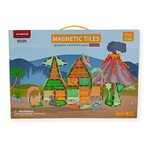
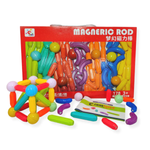
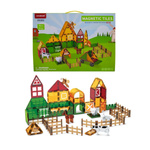
Blocks for an 8-year-old should correspond to the growing skills and more specific interests of the child. At this age, children show more patience, precision and ability to plan complex projects. Eight-year-olds are already able to carry out multi-step constructions that require a systematic approach and problem solving. Advanced block sets with smaller elements and more detail allow children to create realistic models and elaborate structures. At this age, playing with blocks is often related to a child's specific interests - history, architecture, engineering or fantasy.

Developing an 8-year-old's skills through block play

Construction blocks at this stage of development support analytical and spatial thinking - Children learn to analyze complex instructions, plan construction steps and visualize three-dimensional structures. Advanced models require precise measurements and an understanding of proportions, which develops mathematical skills. Eight-year-olds also learn through playing with blocks a systematic approach to problem solving - when they encounter a difficulty, they can already analyze the cause and methodically seek a solution. This is a valuable skill that translates into success in schooling. Blocks with mechanical or electrical components introduce the child to the basics of physics, technology and engineering, sparking an interest in science.

What sets of building blocks will work best for an 8-year-old?

When choosing blocks for an eight-year-old, it is worth paying attention to thematic sets related to the child's interests - from historical buildings, to space vehicles, to modern architecture. At this stage, children will appreciate the blocks, which allow them to create realistic models with many details. Also an excellent choice are sets with technical elements - motors, gears, sensors - which introduce the basics of robotics and automation. Eight-year-olds will be interested in the programmable blocks, combining construction fun with their first steps in coding. Kits that can be expanded and combined with each other give the child more creative freedom and the opportunity to realize their own projects.

Toys for an eight-year-old should respond to his growing skills and more specific interests. In our offer you will find a wide range of products that support the development of the child at this stage. In addition to advanced building blocks, eight-year-olds will appreciate the thematic and collectible sets, which can be expanded and modified according to your own ideas. These toys not only provide entertainment, but also teach patience, planning and the satisfaction of completing a complex project.

At the age of 8, children are ready for more complex educational toys from the STEM category (Science, Technology, Engineering, Mathematics) - sets for scientific experiments in the area of chemistry, physics or biology, which develop curiosity about the world and the ability to draw conclusions. Microscopes with slides, telescopes or archaeological kits support specific interests and can be the beginning of a lifelong passion. Eight-year-olds will also appreciate puzzle and strategy games, that develop analytical thinking, planning and the ability to anticipate the consequences of their decisions.

All products in our store have been carefully selected by child development experts to ensure the highest quality and educational value. By choosing toys from our offer, you are sure to support the all-round development of your child - both intellectual and social. Remember that at the age of 8, toys can significantly affect developing interests, so choose products that inspire, teach and provide the joy of exploring the world.
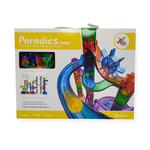
Blocks for an 8-year-old should correspond to the significant developmental changes occurring at that age:

- New skills and interests:
- Greater patience, precision and ability to plan complex projects
- Ability to carry out multi-stage construction requiring a systematic approach
- More specific interests (history, architecture, engineering, fantasy)
- Ability to go into detail and work long term on a single project

- Cognitive development:
- Analytical and spatial thinking allowing analysis of complex instructions
- Ability to visualize three-dimensional structures and understand proportions
- Systematic approach to problem solving and methodical search for solutions
- Ability to take on more complex intellectual challenges

- The best toys for an 8-year-old:
- Advanced block sets with smaller elements and more details
- Thematic sets related to specific interests of the child
- Kits with technical elements introducing the basics of robotics
- More complex educational toys from the STEM category supporting the sciences
- Microscopes with slides, telescopes and other research tools
- Puzzle and strategy games developing analytical thinking

- Features of good toys for an eight-year-old:
- Appropriate level of difficulty - challenging but not frustrating
- Ability to expand and modify according to your own ideas
- Realistic details and functionality close to real objects
- Elements to support specific areas of school learning
- Carefully selected high quality products

Advanced block sets for eight-year-olds provide an excellent tool for developing mathematical and technical skills:

- Development of mathematical skills:
- Practical application of measuring, estimating and comparing quantities
- Understand proportion, scale and symmetry when building models
- Experiencing geometric concepts by creating complex spatial structures
- Intuitive learning of the principles of statics and structural loads
- Practical counting, dividing into parts and combining elements

- Introduction to technical sciences:
- Learning the basics of mechanics by building moving parts
- Understand the principles of gears, levers and gears
- Experimenting with balance, stability and structural strength
- Building models to illustrate the basic laws of physics
- Introduction to electronics through kits with circuits and diodes

- Development of programming skills:
- First experience with programmable building blocks elements
- Learning sequential thinking by planning the robot's actions
- Understand the basics of algorithmics through practical tasks
- Developing logical thinking and predicting the consequences of instructions
- Combining physical design with virtual programming

- Support for school-based STEM education:
- Practical application of knowledge gained in mathematics lessons
- Illustrating physical phenomena through self-made models
- Fostering interest in science through play
- Development of technical and scientific vocabulary
- Preparation for more advanced topics in engineering

- Development of design thinking:
- Learning the design process from concept to completion
- Planning construction stages and anticipating problems
- Testing solutions and making improvements
- Documenting the creation process and drawing conclusions
- Develop a creative approach to solving technical problems

For eight-year-olds, it is advisable to choose more advanced sets of blocks that match their growing skills:

- Thematic sets tailored to interests:
- Models of historical buildings and monuments for history lovers
- Architectural sets replicating modern buildings and bridges
- Blocks related to fantasy, movies or books favored by the child
- Systems for building space vehicles and research stations
- Kits inspired by nature and ecosystems for little naturalists

- Kits with technical elements:
- Blocks with motors, gears and advanced mechanisms
- Structures to create working elevators, cranes and vehicles
- Kits with motion, light or sound sensors
- Models demonstrating the operation of simple machines and equipment
- Systems with pneumatic and hydraulic components

- Programmable pads:
- Kits introducing the basics of robotics and automation
- Blocks with elements that can be programmed through apps
- Designs that are responsive to the environment and interactive with the user
- Systems that combine building physical models with programming
- Kits that prepare you for more advanced STEM projects

- Highly detailed modeling blocks:
- Kits with more small parts for realistic details
- Models that require precise assembly and patience
- Structures that replicate real objects to scale
- Sets with decorative and finishing elements
- Systems that allow the creation of collections of thematically related models

- Blocks with extensive instructions and modification options:
- Kits with multi-step, detailed instructions
- Models with alternative versions of construction from the same elements
- Systems compatible with other sets, allowing expansion
- Blocks that inspire you to create your own original designs
- Kits with suggestions for expanding and improving basic models

When choosing blocks for an eight-year-old, it is worth paying attention to their educational potential, the possibility of long-term use and compatibility with the child's individual interests.

Eight-year-olds are ready for more complex educational toys from the STEM category, which support their scientific development:

- Science experiment kits:
- Comprehensive chemical experiment kits with safe reagents
- Physical experiments demonstrating the laws of mechanics, optics and electricity
- Scientific projects related to renewable energy and ecology
- Kits for testing the properties of water, air and soil
- Experiments to illustrate natural phenomena and laws of nature

- Research tools:
- Microscopes with slides and a kit for preparing your own samples
- Telescopes for sky observation with star maps and guides
- Binoculars and field magnifiers for environmental exploration
- Archaeological kits with excavation tools
- Portable weather stations for making weather observations

- Toys that introduce the basics of robotics:
- Simple robots to build and program yourself
- Kits for learning the basics of electronics and electricity
- Projects using sensors and automation components
- Toys with elements of artificial intelligence and machine learning
- Programmable systems without the need for advanced coding knowledge

- Math and logic sets:
- Games and puzzles to develop abstract and spatial thinking
- Toys that introduce the basics of geometry and algebra
- Logic puzzles of increasing difficulty
- Kits for learning to code without a computer
- Strategy games that require planning and foresight

- Toys that support creative problem solving:
- Construction kits with open-ended tasks to solve
- Projects that integrate knowledge from different STEM fields
- Engineering challenges with limited resources
- Toys to encourage hypothesis testing and documentation of results
- Simulation games that introduce complex systems from real life

- Educational toys to develop specific passions:
- Thematic sets for young geologists, astronomers or botanists
- Educational collections for systematic study of a selected area
- Projects inspired by the work of scientists and engineers
- Toys that introduce the world of advanced technology
- Kits for documenting and presenting one's findings

Good-quality STEM toys for eight-year-olds combine a solid scientific foundation with an engaging form of play to encourage systematic discovery of the world and the development of analytical skills.

Eight-year-olds are ready for puzzle and strategy games, that challenge their developing minds:

- Advanced board games:
- Strategies with elements of resource management and planning
- Economic games that introduce the basics of trade and investment
- Board games with the mechanics of building and developing their own structures
- Adventure games with extensive narrative and decision-making
- Strategies with elements of cooperation and negotiation between players

- Puzzle games:
- Age-appropriate chess, checkers and Go classics
- Spatial puzzles requiring analytical thinking
- Games based on deduction and elimination of opportunities
- Puzzles with hidden patterns and rules to discover
- Games that require combinations and anticipation of opponent's moves

- Puzzles and puzzles:
- Three-dimensional puzzles with a larger number of elements (200-500)
- Puzzle puzzles with sliding pieces
- Kits for building complex structures with connecting elements
- Puzzles with elements of coding and encryption
- Tasks requiring spatial thinking and transformation

- Games to support math skills:
- Board games using counting, addition and multiplication
- Card games based on combinations and number sequences
- Games that introduce the basics of probability and statistics
- Games with elements of measuring, comparing and estimating
- Puzzles with hidden mathematical patterns

- Games to develop critical thinking:
- Games that require verification of information and detection of errors
- Games with elements of argumentation and justification of decisions
- Board teaching how to analyze a situation from different perspectives
- Tasks with multiple possible solutions of varying effectiveness
- Games that inspire people to question assumptions and look for alternatives

- Word and language games:
- Advanced word games to develop vocabulary
- Games with elements of creating definitions and associations
- Games to inspire story-telling and creative writing
- Board games with elements of category recognition and classification
- Games to develop the ability to communicate accurate information

When choosing games for an eight-year-old, it is worth paying attention to their educational potential, while keeping in mind that the best results are produced by those games that really engage the child and motivate intellectual effort.

Toys for an eight-year-old can significantly influence the formation of his passions and interests:

- Observation and identification of interests:
- Paying attention to topics that the child explores independently
- Observation of what books he chooses and what he is most likely to talk about
- Identification of natural predispositions and talents
- Recognizing what activities give the child the most joy
- Noticing at which tasks the child shows particular persistence

- Thematic and collectible sets:
- Toys that deepen knowledge in a child's area of interest
- Collections that can be systematically expanded
- Introductory kits in specialized fields (paleontology, astronomy)
- Materials for creating your own collections and cataloging your knowledge
- Toys inspired by real tools used by professionals

- Toys that support the development of specific talents:
- Musical instruments with learning materials for children with musical hearing
- Advanced art kits for children with artistic abilities
- Sports equipment suitable for children with motor skills
- Toys to support language skills in children with verbal abilities
- Math and logic sets for children with analytical thinking

- Toys that inspire you to expand your horizons:
- Products that introduce related fields of interest
- Toys that combine different areas of knowledge (art and science, history and technology)
- Materials to inspire questions and seek answers
- Kits that encourage experimentation and testing of boundaries
- Toys that bring different perspectives and points of view

- Toys that develop passions together with others:
- Games and sets to share interests with friends
- Toys that encourage people to demonstrate their own knowledge and skills
- Materials for organizing interest clubs and joint projects
- Group passion challenge kits
- Toys that unite different generations around common interests

- Support for long-term passion development:
- Toys with increasing levels of sophistication
- Materials that retain educational value for a long time
- Kits that can be combined and expanded to create more complex designs
- Toys introducing professional terms and methods of the field
- Materials to inspire you to document your own development and achievements

When supporting an eight-year-old's developing interests, be sure to strike a balance between providing direction and space for self-discovery, giving your child a real taste of different fields and finding his or her own passion.

pixel