Save to shopping list
Create a new shopping list
24h | Wysyłka jeszcze dziś
Szukaj
Find the perfect toy in seconds!

Toys for 4 year old

(567)

Four-year-old toddler is a veritable volcano of energy. In the kindergarten he begins to feel at home, spending time playing with children. Full of expression, joy and creative play, he explores the world. Little man slowly begins to distinguish letters from other shapes, and some children are even able to write their names in print. Children already easily arrange objects or toys by color or shape. Most toddlers at this age can also count to 10.

What to play with?

The best bet is education through play. Dhildren as young as 4 absorb new information. They want to know, they want to be able to know, they want to be independent. Various types of blocks will work for play. It will be a shareable toy and you will be able to invite your colleagues to play with it. Blocks teach thinking, planning, reproduction skills, but also creating and experimenting. This toy is the most stimulating for activity, creative play and even learning.

What blocks to choose for a 4-year-old?

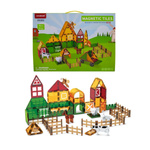
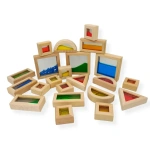
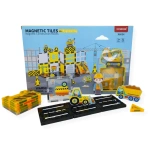
For 4-year-olds, the choice among creative blocks is already much greater. You can offer wooden blocks, but also wooden blocks with magnets. We know that the magnet element works its magic and children love to play with them. Another suggestion could be plastic blocks or, for example, wooden ones with magnets. They often excite children because they are made of semi-transparent plastic and let the light through beautifully. An excellent choice will beconstruction blocks with movable elements will be an excellent choice. Children will easily be able to build a plane, a car or a windmill. It is important that the blocks we offer our kids are of good quality, because this will ensure good and safe play.

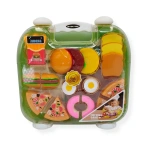
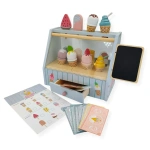
Toys for a four-year-old should take into account his growing independence and creativity. At this age, children are eager to engage in thematic games with a more complex storyline - a store, restaurant, car repair store or hair salon are popular topics for role-playing scenarios. Role-play sets with realistic accessories promote not only imagination, but also social and language skills by imitating real-life situations.

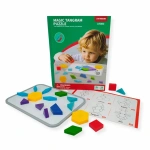
Four-year-olds are ready for first board games with rules - simple strategy games, memory games or games based on dice throwing teach following the rules, dealing with winning and losing and planning. Puzzles with more pieces (24-48) improve concentration and ability to see details. It is also an ideal time to introduce the first experimental sets - simple experiments with magnets, water or light that stimulate curiosity about the world and interest in science.

Children at the age of 4 show a lot of manual dexterity, so a good choice will be creative sets requiring more precision - kits for bead threading, weaving, first paper work or modeling. Outdoor toys - Bicycles, scooters, balls, team game sets - promote physical development and teach cooperation. Four-year-olds are also interested in music and rhythm, so simple musical instruments or karaoke sets can become a favorite part of everyday play. All of our toys for four-year-olds have been carefully selected to foster independence, creativity and the development of social skills, which are crucial in this stage that prepares for schooling.
The four-year-old toddler is a a veritable volcano of energy and creativity, whose play needs are clearly evolving compared to younger children:

- Cognitive development of a four-year-old:
- Children already easily arrange objects or toys by color or shape
- Most toddlers at this age can count to 10
- Slowly begin to distinguish letters from other shapes
- Some children can write their name in capital letters
- Show a natural interest in reading and writing

- The need for education through play:
- Children as young as 4 absorb new information with unprecedented intensity
- They ask a lot of questions and expect specific answers
- Show interest in simple scientific phenomena and experiments
- They are able to focus attention for longer periods of time, which enables more complex activities

- Striving for independence:
- They want to be independent in carrying out various activities
- They want to have a say in the choice of toys and the way they play
- Show pride in their own skills and achievements
- They like tasks that give them a sense of competence

- Social needs:
- In the kindergarten they begin to feel at home
- More and more willing to spend time playing with other children
- Develop cooperative skills and first friendships
- They learn to negotiate and resolve conflicts while playing together

- The need for creative expression:
- Full of expression, joy and creative energy, they explore the world
- They like to create and experiment with different materials
- Tell increasingly complex stories while playing
- Eagerly engage in thematic and role-playing games

Toys for four-year-olds should respond to these needs by offering challenges tailored to their abilities, supporting their natural curiosity and providing space for self-expression.

For 4-year-olds, the choice among creative blocks is much wider than for younger children, allowing for more complex and engaging constructions:

- Wooden blocks:
- Classic, durable and eco-friendly
- Promote understanding of static and balance principles
- Allow the creation of complex structures
- They are universal in nature and "grow" with the child

- Magnetic blocks:
- The magnet element works its magic attracting the attention of children
- Wooden blocks with magnets combine natural materials with fascinating physics
- Enable the construction of three-dimensional structures without the risk of collapse
- Introduce the basic principles of magnetism in an accessible way

- Transparent blocks:
- Plastic blocks made of translucent plastic
- They let the light through beautifully, which arouses the delight of children
- Allow you to experiment with color and light
- Can be used on illuminated tables or under a lamp

- Construction blocks:
- Construction blocks with moving parts
- Allow you to build dynamic models - airplanes, cars, windmills
- Introduce basic principles of mechanics and motion
- Develop engineering thinking and problem-solving skills

- Blocks with joining systems:
- Sets with a variety of ways to combine elements
- Improve hand-eye coordination and precision of movements
- They teach spatial thinking and planning
- Allow the creation of more detailed models

- Thematic blocks:
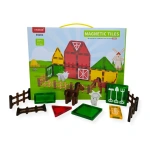
- Sets inspired by specific themes (city, farm, space)
- Promote role-playing fun and imagination development
- Encourage creation and storytelling
- Can be combined with figures and other toys

When choosing blocks for a four-year-old, it is important to pay attention to their quality and safety. Toys made of good materials will not only provide good and safe fun, but they will also serve for a long time, often passing on to younger siblings.

Playing with blocks provides comprehensive developmental stimulation for a 4-year-old child, while supporting many key areas:

- Spatial and logical thinking:
- Understand spatial relationships (above, below, beside, behind, in front)
- Perceiving and creating patterns and sequences
- Predicting the consequences of actions (what will happen when I add this block?)
- Blocks teach thinking, planning and reproduction skills

- Creativity and innovation:
- Creating and experimenting with different designs
- Coming up with new solutions and testing their performance
- Transforming ideas and perceptions into concrete structures
- Develop originality of thinking and non-standard approaches

- Mathematical skills:
- Counting elements and understanding quantitative concepts
- Learning about geometric shapes and their properties
- Experiencing symmetry and proportion
- Intuitive learning of the principles of mechanics and physics

- Manual dexterity:
- Improving the precision of hand and finger movements
- Eye-hand coordination in combining elements
- Strengthening hand muscles in preparation for learning to write
- Improving manipulative skills

- Social skills:
- Collaboration on joint projects (blocks are a divisible toy)
- Negotiate ideas and solutions with peers
- Sharing materials and space
- Developing communication skills while playing together

- Concentration and patience:
- Increasing the time to focus attention on a single task
- Strive to complete the construction that has begun
- Dealing with frustration when things don't work out
- Systematicity and consistency in the pursuit of goals

- Development of imagination and thematic play:
- Create scenarios and stories around built structures
- Role-playing with constructed models
- Combining blocks with other toys in creative play
- Verbalizing construction ideas and plans

Blocks are therefore the toy that most stimulates activity, creative play and even learning, offering comprehensive training in skills needed for both preschool education and later schooling.

Toys for a four-year-old should take into account his growing skills and interests. In addition to blocks, consider:

- Thematic play sets:
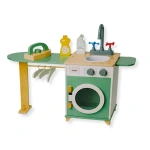
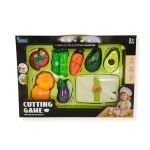
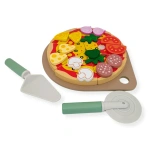
- Role-playing accessories (store, restaurant, workshop, hair salon)
- Thematic games with a complex storyline promote social and linguistic development
- Miniature tools and equipment replicating real objects
- Disguises and costumes to inspire creative play

- Board and puzzle games:
- First board games with rules teaching compliance
- Simple strategy games to develop thinking
- Memory games to improve memory and concentration
- Puzzles and puzzles appropriate for this age

- Puzzles and jigsaw puzzles:
- Puzzles with more pieces (24-48)
- Puzzles with smaller pieces that require more precision
- Thematic puzzles related to the child's interests
- Three-dimensional puzzles to develop spatial thinking

- Experimental kits:
- First experimental sets for simple experiments
- Experiment kits with magnets, water, light
- Simple microscopes and magnifiers for observation
- Toys demonstrating basic physical phenomena

- Creative toys:
- Creative Kits for manual work
- Materials for bead stringing, weaving, first paper works
- Modeling clay, dougholine and plastic modeling compounds
- Paints, markers and large crayons to develop art skills

- Activity and outdoor toys:
- Outdoor toys supporting physical development
- Bicycles, scooters, balls adapted to the skills of a four-year-old
- Team game sets that teach cooperation
- Simple sports equipment to develop coordination

- Musical toys:
- Simple musical instruments for learning rhythm
- Karaoke sets encouraging musical expression
- Toys that respond to movement, dance and sound
- Interactive books with musical elements

- Educational toys:
- Interactive books and educational tablets
- Toys for learning letters, numbers and first words
- Globes and maps adapted to preschool age
- Calendars and clocks to introduce concepts of time

The best toys for a four-year-old are those that foster independence, creativity and the development of social skills, key in the period preparing for school education.

A selection of toys that "grow" with your child is a wise investment, providing long-lasting educational and play value:

- Features of multi-stage toys:
- Ability to adjust the level of difficulty to suit growing skills
- Different ways to use the same toy
- Modular design that allows the creation of increasingly complex structures
- Compatibility with other sets and expandability

- Blocks with high development potential:
- Versatile sets of blocks that can be combined in a variety of ways
- Thematic blocks that can be used in increasingly complex scenarios
- Construction blocks with moving parts with the ability to build more advanced models
- Sets that can be combined and expanded as the child's skills grow

- Games with modifiable rules:
- Board games with different levels of difficulty
- Sets that allow you to create your own variants of the game
- Games that can be simplified for younger children or complicated for older children
- Multifunctional boards for different types of games

- Creative toys with a wide range of uses:
- Plastic and construction materials that can be used in many ways
- DIY kits that can be used for more complex projects over time
- Musical instruments that "grow" with the child's skills
- Art toys allowing increasingly advanced techniques

- Electronic toys with adjusted levels:
- Interactive toys with different levels of difficulty
- Educational tablets and consoles with age-appropriate programs
- Programmable toys whose capabilities expand with the child's skills

- What to look for when buying:
- Durability of workmanship - quality toys will last for years
- Wide age range stated by the manufacturer (e.g., 4-10 years)
- Possibility to buy additional expansion elements
- Toys that inspire creative thinking, not just reproduction
- Good and safe fun will provide a selection of toys from proven manufacturers

- Toys worth the long-term investment:
- High-quality sets of building blocks
- Wooden educational toys from reputable manufacturers
- Versatile creative materials that can be used at different stages of development
- Musical instruments of real quality (not just toys)

By choosing toys that "grow" with your child, you not only provide long-lasting educational value, but also teach them to see new possibilities in the items they already own - a valuable lesson in creativity and thriftiness.

Four-year-old child wants to be independent and actively seeks opportunities to demonstrate his skills. The right toys can significantly support this natural process:

- Toys that develop independence:
- Self-construction kits with clear, pictorial instructions
- Toys with self-service elements (fastening, tying, moving)
- Products that the child can assemble and disassemble on his own
- Self-creation kits (no adult help required)

- Decision support toys:
- Games with choice of path or strategy
- Open sets with multiple uses
- Construction blocks that allow you to realize your own ideas
- Toys with different levels of difficulty for self-selection

- Adult role-play kits:
- Miniatures of real household tools and appliances
- Accessories for cooking, cleaning, fixing fun
- Sets for playing store, post office, restaurant
- Toys that allow you to imitate occupations and activities performed by adults

- Toys that support self-organization:
- Simple calendars and activity planners
- Toys with storage and sorting systems
- Sets with elements for categorizing and classifying
- Games that teach sequencing and action planning

- Fostering initiative and creative thinking:
- Open creative materials with no imposed use
- Transformable and customizable toys
- Kits with components to create your own games and activities
- Materials that encourage experimentation and creating and experimenting

- Toys that build a sense of competence:
- Products with clearly defined goals, giving satisfaction from completing the task
- Toys with elements of graded difficulty (from easy to more difficult)
- Games and puzzles to improve specific skills
- Construction kits with visible end result

- A parent's approach to supporting self-reliance:
- Creating a safe space for independent play
- Provide toys on low shelves, easily accessible to the child
- Giving the child time to solve the problem on their own
- Appreciate the process and effort, not just the end result
- Encouraging independent choice of toys and play

Properly selected toys not only develop a four-year-old's practical skills, but also build his confidence and sense of agency, which are the foundation for healthy emotional and social development.

pixel