Save to shopping list
Create a new shopping list
24h | Wysyłka jeszcze dziś
Szukaj
Find the perfect toy in seconds!

Toys for 3 year old

(422)

When we have at home a little 3-year-old toddler we are considering what educational toys to provide to support his development. And what will support our little man, who is absorbing new experiences from the surrounding world? Of course, these will be blocks! For 3-year-old children, we will already have more choice in the products offered. They will be able to be both building blocks, as well as educational. Plastic blocks, wooden blocks, but also magnetic blocks.

Integration of children vs. playing with blocks

Children as young as 3 years old noticeably present to us what they they are particularly interested in. For a gift to meet expectations, consider the following features. Blocks should develop skills, must be of good quality and must be durable to serve the child longer. Children as young as 3 years old often already become preschoolers and begin to integrate with other children. Playing with blocks makes children learn to share and play in a group. The blocks also provide an opportunity for more children to play.

Safety and difficulty level of blocks for 3-year-old children

Looking for the perfect building blocks for preschoolers, it is worth taking into account the degree of difficulty and pay attention to the posted information on the age of children. Security the use of creative toys for 3-year-olds must be at the first place when selecting them. Let's pay attention to labels and certificates and do not choose creative toys dedicated to older children. Instead, we will completely unnecessarily inflict stress, often tears of disappointment that something does not work out. Manufacturers of children's toys know from what age their product will meet children's expectations.

Toys for a three-year-old should respond to his growing skills and intense development of imagination. At this age, children begin the stage of thematic play, creating increasingly complex scenarios and stories. In addition to building blocks, three-year-olds love figure sets - Animals, fairy tale characters or vehicles that become heroes of imaginary adventures. These toys support the development of speech, narrative skills and abstract thinking ability.

Educational toys for three-year-olds include the first board games with simple rules that teach counting, recognizing shapes and colors, and following order. Puzzles with more pieces (15-20) provide an excellent challenge for developing concentration and patience. At this age, children also show increased manual dexterity, making art sets - Finger paints, large markers, art compounds - a great choice to support creativity.

A three-year-old is usually a very active child, so it is worth paying attention to toys that promote physical development - The first cross-country bicycles, scooters with three wheels, balls and motor play sets. These products not only provide a lot of fun, but also promote coordination, balance and overall fitness. The first musical instruments - drums, cymbals, simple keyboards - introduce the child to the world of sounds and rhythm, promoting musical sensitivity. All of our toys for three-year-olds have been carefully selected to combine high educational value with safety and durability, supporting the child's all-round development during this fascinating period.
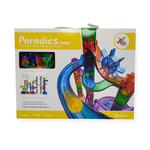
For the **little 3 year old toddler** there is available a a much wider range of different building blocks, which support his intensive cognitive and motor development.

The best types of blocks for a three-year-old are:
- Construction blocks - allowing the construction of increasingly complex structures
- Educational blocks - with letters, numbers or pictures to develop preschool skills
- Plastic blocks - lightweight, colorful, with an easy connection system adapted to the dexterity of a three-year-old's hands
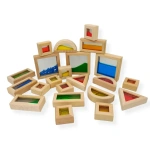
- Wooden blocks - classic, durable, pleasant to the touch and environmentally friendly
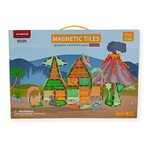
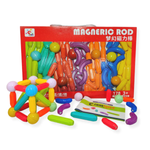
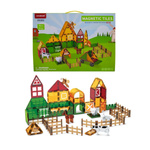
- Magnetic blocks - fascinating, easy to put together and introduces the child to the world of physical phenomena
- Thematic blocks - inspiring to play in specific scenarios (city, farm, airport)
- Blocks of various shapes - developing spatial imagination and manual skills

The developmental value of building blocks for a three-year-old:
- Promoting spatial thinking - building three-dimensional structures teaches spatial relationships
- Development of eye-hand coordination - precise joining of elements requires cooperation of eye and hand
- Stimulation of creativity - making your own constructions develops imagination
- Learning to concentrate - building requires focusing attention for a long time
- Developing social skills - playing together teaches cooperation and sharing
- Strengthening patience - the building process teaches perseverance in pursuit of a goal

When choosing blocks for a three-year-old, it is worth observing which ones engage the child the most and **particularly interest him/her**, and then develop this area by selecting the appropriate sets.

Three-year-old children are entering a key stage of social development, and the blocks are an an excellent tool to promote integration with peers and building a foundation for cooperation.

- First group experience:
- Children as young as 3 years old often start attending preschool and **integrate with other children**
- Playing with blocks is one of the first types of activities that naturally bring children together in a common activity
- Joint construction teaches synchronization of activities and cooperation

- Learning to share and wait:
- While playing with blocks **children learn to share** materials and space
- Blocks teach to wait patiently for their turn in using popular elements
- The child experiences the benefits of sharing in the form of richer, shared fun

- Building collaborative skills:
- Jointly determining what will be built develops negotiating ability
- Sharing ideas and accepting other children's suggestions teaches compromise
- Assigning roles and tasks in the building process introduces the first experience of teamwork

- Communication development:
- Need to express your ideas motivates you to improve your language skills
- Children learn to formulate requests ("Give me the red block") instead of taking away toys
- Play encourages development of vocabulary related to space, colors and shapes

- Conflict resolution:
- Inevitable disagreements during common play teach the basics of problem solving
- Children gradually discover that cooperation brings better results than competition
- Under the watchful eye of adults, three-year-olds learn to express their displeasure in a constructive way

- Pride in collective achievement:
- Completing a joint construction gives children a sense of collective success
- The experience that "together we can do more" builds the foundation for future teamwork

Playing with blocks in a group is not just entertainment, but a real lesson in social skills that will pay off throughout a child's life.

Choosing the right blocks for a three-year-old requires paying attention to several key aspects, with safety should always be a priority.

- Safety first:
- **Safety** of use must be at **first place** when choosing toys
- Check **safety labels and certificates** (CE, EN71) on packaging
- Choose products from reputable manufacturers that adhere to quality standards
- Avoid blocks with small, easily detachable parts
- Pay attention to the quality of the materials and paints used (they should be non-toxic)

- Age adjustment:
- When looking for **ideal blocks for preschoolers** always check the recommended age on the package
- Do not choose blocks **designed for older children** - they may be too difficult or contain inappropriate elements
- Overly complicated toys can lead to frustration and discouragement
- Manufacturers determine age based on development and safety testing

- Quality and durability:
- Blocks should be made of sturdy materials resistant to falls and bending
- Check that the pieces fit together well and do not come apart easily
- Smooth edges without burrs for safe play
- Good quality workmanship ensures that the toy will serve for a long time

- Ease of cleaning:
- Three-year-olds often play on the floor and don't always have clean hands
- Choose pads that are easy to wash or wipe down
- Moisture-resistant materials extend the life of the toy

- Storage system:
- Practical packaging or container for blocks makes it easy to keep things organized
- Teaches the child to be responsible for his toys
- Prevents loss of parts

Remember that by choosing safe, high-quality blocks suitable for the age of a three-year-old, you are not only providing your child with rewarding play, but also investing in a toy that will last for a long time.

**Toys for a three-year-old** should respond to his intensive cognitive, social and physical development. In addition to building blocks, consider the following educational toys, which support different areas of development:

- Toys to support thematic play:
- **Figure sets** of animals, cartoon characters or vehicles to create stories
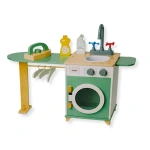
- Mini stoves, workshops and doctor's kits for social role play
- Dollhouses and garages with accessories to develop imagination
- Simple dolls and plush toys with accessories to teach empathy and caring

- Toys that develop cognitive skills:
- First board games with simple rules to teach counting and sequence
- **Puzzles with more pieces** (15-20) to improve concentration
- Puzzles with pictures, letters and numbers to prepare for learning to read
- Advanced sorter with a variety of shapes and tasks
- Educational cards with pictures for recognizing and naming

- Toys that support creativity:
- **Art kits** with large markers, finger paints
- Plastic masses, pastry and modeling clays for creating three-dimensional forms
- Drawing boards and first coloring sets
- Simple DIY kits tailored to the abilities of a three-year-old

- Musical toys:
- the **first musical instruments** such as drums, cymbals, tambourines
- Simple keyboards with colorful keys and sound effects
- Microphones with effects and voice recording toys
- Interactive music toys to encourage dance and movement

- Toys to promote physical development:
- **Toys to promote physical development** like the first cross-country bikes
- Scooters with three wheels to improve balance
- Balls of different sizes and textures to practice coordination
- Tunnels, tents and obstacles to overcome
- Simple sports sets (skittles, Velcro darts) to develop precision of movement

- Toys to support learning independence:
- Toys with fasteners, buttons and zippers to improve manual dexterity
- Simple puzzles with sequences to teach logical thinking
- Toys with sorting elements to support organization

The best toys for a three-year-old are those that "grow" with the child, offering new opportunities for play as his skills develop.

Three-year-olds are beginning to clearly show their preferences and special interests, which gives parents guidance in choosing educational toys perfectly suited to their child's needs:

- Observation of spontaneous play:
- Pay attention to which toys your child chooses most often
- Observe how long he can focus on different types of activities
- Note whether the child prefers construction, movement, artistic or narrative play
- Listen to the topics your child brings up in casual conversations

- Typical areas of interest for three-year-olds:
- Fascination with vehicles (cars, trains, construction machinery)
- Interest in the animal world and nature
- Curiosity about the operation of various devices and mechanisms
- Willingness to play social roles (doctor, cook, teacher)
- A love of music, dance and artistic expression
- Passion for books and stories

- Matching toys to interests:
- For the little builder - sets of blocks with different joining systems
- For the young nature explorer - animal figures, simple microscopes, magnifying glasses
- For the future engineer - toys with buttons, knobs, simple mechanisms
- For the artistic soul - a variety of art materials and musical instruments
- For the story lover - interactive books, puppets, role-play figures

- Rotation of toys according to the development of interests:
- Introduce new toys gradually, observing the child's reactions
- Hide toys that the child is bored with for a while - after a break, they may again arouse interest
- Combine toys from different categories to encourage creative thinking

- Enriching interests:
- Don't limit your child to one type of toy, even if he shows a strong preference
- Gently introduce toys from new areas, expanding horizons
- Show different ways to play with the same toys
- Combine your child's favorite topics with new skills (e.g., counting favorite toy cars)

- Support for interests beyond toys:
- Organize trips related to your child's interests (zoo, museum, fire department)
- Read books on topics that fascinate your child
- Play together in a way that develops toddler's passions

Remember that the right match of toys to a child's interests not only makes him happy, but also strengthens his motivation to learn and explore the world.

Appropriately selected educational toys are excellent preparation of a three-year-old for the challenges of starting preschool education:

- Development of social skills:
- Playing with blocks in a group teaches children to **integrate with other children**
- Child learns the principles of cooperation, **learns to share** toys and space
- Developing the ability to communicate and express one's needs
- Learning to respect the rules and order when playing together
- Building confidence in dealing with peers

- Preparing for the routine and structure of the day:
- Educational toys teach concentration and focus for longer periods of time
- Child learns the concept of starting and finishing tasks
- Learning to organize and put toys back in their place
- Developing the ability to follow instructions and directions

- Support for cognitive development:
- Recognition of colors, shapes and patterns - the basis of preschool education
- Development of the ability to classify and categorize objects
- Building a foundation for logical thinking and problem solving
- First experience with numbers and basic mathematical operations
- Stimulation of memory and association skills

- Preparation for learning to write:
- Small-motor development toys prepare hand for using writing instruments
- Blocks and puzzles strengthen hand muscles and improve precision of movement
- Art activities develop hand-eye coordination needed for learning to write
- Manipulative games refine the pincer grip used when holding a pencil

- Development of self-reliance:
- Buckle toys prepare for independent dressing
- Learning to identify and solve problems increases independence
- Building confidence in decision-making
- Developing perseverance in pursuit of goals despite difficulties

- Emotional adaptation:
- Role-play toys help work through emotions of separation
- Learning to regulate emotions when encountering difficulties in play
- Building resilience to frustration and ability to deal with obstacles
- Develop empathy and understanding of other children's emotions

By incorporating the above types of educational toys into your three-year-old's daily activities, you are not only supporting his natural development, but also gently preparing him for the exciting new stage of life that is starting kindergarten.

pixel