Save to shopping list
Create a new shopping list
24h | Wysyłka jeszcze dziś
Szukaj
Find the perfect toy in seconds!

Toys for 2 year old

(116)

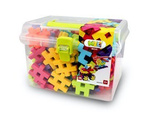
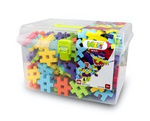
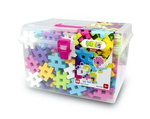
Blocks for a 2-year-old is a toy, that can work wonders. Building blocks can keep you busy for a long while for a long while children who thus learn patience and focus their attention for longer and longer periods of time. Blocks require a lot of attention, so during play toddlers train their patience. It is worth investing in the purchase of blocks if a parent sees that the child quickly becomes frustrated when playing with other toys. Blocks wonderfully calm, develop imagination and allow you to create structures according to your own ideas.

Safety and difficulty level of blocks for 2-year-old children

When choosing blocks for 2-year-old children, also focus on safety and choose blocks with larger elements. Blocks must not be too small, as there is a risk of swallowing or choking. Deciding to buy building blocks, you should pay attention to the signs, for which age group age group the blocks are dedicated to. Don't make a choice "over the top" and don't buy for older children. This will only cause frustration and unnecessary embitterment that something is not working out. It's worth trusting the markings placed on products by reputable manufacturers.

Which blocks to choose and why ?

Once we decide to buy blocks for our 2-year-old consolation will be good if we take into account what interests our child manifests. We will then create a great space for creating a farm for animals, a castle for princesses or a race track for small cars or at least a train station, if we have at home a train lover.

Toys for a two-year-old is not only blocks, but a wide range of products that support the intensive development of the little explorer. At this age, children are beginning to express their preferences and are becoming more aware of how they choose to play. Role-play toys - such as small stoves, workshops and doctor's kits - are excellent tools for imitating adults and developing social skills. Two-year-olds love to pretend to cook, fix or take care of a doll or teddy bear, which supports their imagination and language skills.

First puzzles with large elements and simple pictures develop cognitive skills and hand-eye coordination. Two-year-olds enjoy sorting objects by color or shape, so sorter i puzzles is a great choice. Interactive books with moving parts or sounds encourage discovery and support speech development. Children at the age of two also begin to be interested in drawing - large crayons, boards for painting whether dynamic sand sets are excellent tools for expressing creativity.

Choosing toys for a 2-year-old, bet on versatility and the ability to play in many ways. Children at this age quickly get bored with homogeneous activities, so the best toys are those that can be transformed and used in a variety of ways. Pay attention to the quality of workmanship - two-year-olds can be very energetic in play, so the products must withstand intensive use. All educational toys in our offer have been carefully selected to combine safety, durability and developmental value, supporting the harmonious development of the little explorer in the key period of the formation of his skills.
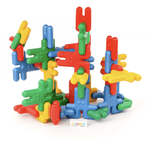
**Blocks for the 2-year-old is a toy** that offers unique developmental benefits in the key period of the child's skill formation.

The most important advantages of playing with blocks for a two-year-old:
- Extending concentration - occupy the child for a **longer moment**, teaching to focus attention
- Learning patience - two-year-olds **train their patience** while putting together structures
- Calming effect - blocks wonderfully **quiet** and help calm overactive children
- Stimulation of imagination - ability to create structures **according to your own ideas**
- Small motor development - precise grasping and combining of elements improves manual dexterity
- Introduction to the basics of mathematics - first experience with space, shapes and proportions
- Strengthening self-esteem - the joy of creating and completing the construction yourself
- Learning to solve problems - looking for ways to combine elements develops logical thinking

Regular play with blocks supports the harmonious cognitive and emotional development of a two-year-old while providing him with the satisfaction of creative activity. Blocks are an investment in your child's development, which will serve for many years, adapting to the growing skills of the toddler.

Choosing the right blocks for a 2-year-old requires special attention in several key aspects:

- Safety first:
- Blocks should have **blocks with larger pieces** to exclude choking hazards
- Elements **cannot be too small** - two-year-olds still explore the world often by putting objects in their mouths
- Materials must be non-toxic and have safety approvals
- No sharp edges or small detachable parts

- Age adjustment:
- Always check what **age** the pads are dedicated to
- **Trust the manufacturer's labeling** regarding age groups
- Avoid buying blocks "over the top" - toys that are too difficult cause frustration
- Choose blocks that the child can connect and disconnect independently

- Quality and workmanship:
- Durable materials resistant to drops and heavy use
- Stable element connections for building satisfaction
- Easy to clean surfaces
- Clear, indelible colors that are safe for health

- Development value:
- Variety of shapes to stimulate imagination
- Ability to create different designs
- Blocks that "grow" with the child, offering new possibilities as skills develop
- Potential to combine with other toys in creative play

By choosing blocks from reputable manufacturers and following the above rules, you will provide your two-year-old not only with safe play, but also with a valuable tool to support his development.

Choosing the right type of blocks for **blocks for our 2-year-old** child should take into account the individual interests and preferences of the child:

- Observation of interests:
- Pay attention to the topics that fascinate your child in books and stories
- See which toys he chooses most often for spontaneous play
- Notice if the child shows interest in a particular environment (e.g., farm, city)

- Theme blocks tailored to your tastes:
- For small animal lovers - farm building sets with animal figures
- For girls fascinated by fairy tales - blocks for building **princess castle**
- For fans of vehicles - sets with **small cars** or race tracks
- For kids who like trains - blocks to create tracks and a train station for the **train lover**

- Taking into account the temperament of the child:
- For energetic children - larger foam blocks for dynamic play
- For calm, patient toddlers - sets with more details
- For children who like order - blocks with organization and storage system

- Developing new interests:
- Introduce new topics through attractive sets of building blocks
- Combining familiar themes with new elements for the child
- Gradual expansion of the theme of fun

- Social value and fun together:
- Blocks that allow you to build with siblings or parents
- Sets to inspire thematic and role-playing fun
- Elements that encourage storytelling about the structures built

By matching the blocks to your child's individual tastes, you not only create a space for rewarding play, but also support his passions and interests from an early age.

**Toys for the two-year-old** is a broad category of products that support intensive development in various areas. In addition to blocks, it is worth considering:

- Role-play toys:
- Small stoves with a set of dishes and food products
- Mini workshop with tools adapted to little hands
- Medical kits to encourage playful care of others
- Houses for dolls or animal figures to develop narrative and empathy

- Toys that develop cognitive skills:
- **First puzzle** with large pieces and simple pictures (4-12 pieces)
- **Sorters** of shapes in the form of houses, boxes or vehicles
- Colorful **puzzles** with age-appropriate templates
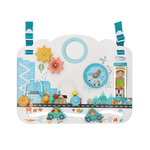
- Toys with buttons, sliders and dials to teach cause-and-effect relationships

- Toys that support creativity:
- **Painting boards** with large crayons or washable markers
- **Dynamic sand sets** to safely model and create
- Large, soft plastic masses for kneading and molding
- Stamping kits and first art experiences

- Speech and communication development toys:
- **Interactive books** with moving parts and sounds
- Simple musical instruments (drums, cymbals, maracas)
- Phone and interactive toys to encourage imitation of dialogues
- Animal and human figure sets to inspire storytelling

- Toys to promote physical development:
- Rides and pushers to help develop large motor skills
- Tunnels and tents to encourage physical activity
- Simple balls of different textures and sizes
- Safe water play sets

When choosing **educational toys** for a two-year-old, keep in mind the variety that will provide all-around stimulation and allow the child to discover his preferences and talents.

Playing with blocks is comprehensive training of many skills, crucial for the proper development of a 2-year-old child:

- Small motor development:
- Precision grasping, stacking and joining of parts
- Coordination of the work of both hands during construction
- Perfecting the tweezers grip and finger manipulation
- Strengthening hand and wrist muscles

- Cognitive development:
- Recognition of shapes, colors and sizes
- Understanding spatial relationships (on, under, beside, inside)
- Understand structural stability and physics fundamentals
- Categorize and classify elements
- Anticipate the consequences of your actions

- Social-emotional skills:
- Regulating emotions and dealing with frustration
- Building a sense of agency and self-confidence
- Learning to share while playing together with adults or peers
- Developing patience and perseverance in pursuit of goals

- Language skills:
- Enriching vocabulary related to space and construction
- Creating narratives around emerging structures
- Naming shapes, colors and objects created
- Formulation of simple construction plans

- Mathematical fundamentals:
- Experiencing the first mathematical concepts (more, less, same)
- Comparing sizes and spatial relationships
- Intuitive counting of elements during play
- Pattern and sequence recognition

- Creativity and imagination:
- Create your own designs **according to your own ideas**
- Inventing new uses for known elements
- Transforming abstract ideas into concrete structures
- Developing thinking outside the box

Regular block play provides a two-year-old with integrated developmental experiences that build a solid foundation for future learning and social skills.

Supporting the playfulness of a two-year-old requires a balanced approach between assistance and space for independence:

- Creating an enabling environment:
- Organize the space with good lighting and a comfortable place to play
- Limit the number of toys available at one time to avoid overstimulating the child
- Store blocks in easy-to-access, clear containers
- Ensure a calm environment conducive to concentration

- Wise accompaniment:
- Be accessible, but don't impose your vision of fun
- Allow your child to take initiative and implement their own ideas
- Offer help only when the child asks for it or shows frustration
- Appreciate the process of play, not just the end result

- Inspiring without imposing:
- Demonstrate new uses for blocks through your own example
- Ask open-ended questions: "What can we build from this?", "What would happen if...?"
- Introduce additional play elements (figures, vehicles) to enrich the narrative
- Combine blocks with books, stories or songs

- Verbalization and language enrichment:
- Name colors, shapes and activities while playing together
- Comment on what the child is doing: "You put a red block on top of a blue one"
- Encourage people to describe their own activities and the constructions they create
- Talk about the properties of the blocks (big/small, heavy/light)

- Grading of difficulties:
- Start with simple tasks and gradually increase their complexity
- Adjust the level of challenge to the child's current abilities
- Celebrate small successes, building motivation to take on more difficult tasks
- Introduce new elements to familiar games

- Versatility and variety of play:
- Show how the same toys can be used in multiple ways
- Combine different types of educational toys in joint play
- Rotate available toys to keep things fresh and interesting

Remember that the most valuable play is the one that gives the child joy and satisfaction, while developing his skills in a natural, unforced way.

pixel