Save to shopping list
Create a new shopping list
24h | Wysyłka jeszcze dziś
Szukaj
Find the perfect toy in seconds!

Toys for 10 year old

(302)

Blocks for a 10-year-old are already advanced kits that allow the implementation of complex construction projects. Ten-year-olds show much more precision, patience and abstract thinking skills than younger children. They can follow complex instructions, but also modify existing designs and create their own constructions. Advanced construction kits with many small parts and specialized parts allow children to create models with a high degree of complexity and realism. At this age, children already have well-defined interests, which they can develop through appropriately selected thematic sets.

Benefits of playing with blocks for a 10-year-old

Constructions from building blocks for ten-year-olds become real engineering projects - Children learn to plan complex structures, understand forces and loads, design mechanisms and solve technical problems. Playing with blocks at this age develops analytical and spatial thinking at an advanced level - the child analyzes complex instructions, visualizes three-dimensional structures and plans the sequence of steps needed to complete the project. Ten-year-olds learn the basics of physics, mechanics and math through building with blocks in a hands-on, engaging way. Creating your own designs also develops creativity and innovative thinking - skills increasingly valued in today's world.

What blocks to choose for a 10-year-old child?

When choosing building blocks for a 10-year-old, it is worth paying attention to advanced technical sets with mechanical, electrical or pneumatic components to create working models of machines, vehicles or robots. A child of this age will appreciate specialized thematic collections related to his interests - from architectural replicas of famous buildings, to historical reconstructions, to futuristic designs inspired by science and technology. The following are also excellent choices programmable sets, which combine construction with learning the basics of robotics and coding, developing the competencies of the future. It is advisable to choose blocks with high quality workmanship, which will allow precise fitting of elements and stability of even complex structures.

Toys for 10-year-olds stand on the borderline between childhood and early adolescence, so they should take into account growing maturity and more specified interests. At this age, children value toys that allow them to express their individuality and develop specific passions. In our offer you will find a wide range of products that meet the developmental needs of ten-year-olds. In addition to advanced building blocks, it is worth paying attention to complex models requiring patience and precision - replicas of buildings, vehicles or spaceships, which are not only fun, but also a valuable hobby.

Children as young as 10 are ready for professional science kits - Microscopes with advanced slides, telescopes, chemistry or electronic experiment kits that develop interest in science and discovery. Robotics and programming kits teach logical thinking, problem solving and the basics of coding - key skills in today's technological world. Ten-year-olds can also engage in more complex strategy games, which require planning, analysis and decision-making - from classic chess to modern board games with complex mechanics.

All products in our store have been carefully selected in terms of quality, safety and educational value. By choosing toys from our range, you are sure to support your child's intellectual, creative and social development during this important period. Remember that well-chosen toys for a 10-year-old can not only provide entertainment, but also develop passions that will accompany the child for years to come, and even influence his later educational and career choices.
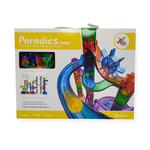
Blocks for a 10-year-old and other toys should respond to the advanced level of development of a child at this age:

- Cognitive development of a 10-year-old:
- Much greater precision, patience and ability to think abstractly
- Ability to follow complex instructions and multi-step projects
- Ability to modify existing designs and create custom designs
- Well-specified interests and the ability to focus for long periods of time
- Developed ability to plan and predict the results of activities

- The best toys for children aged 10:
- Advanced construction kits with many fine elements
- Technical kits with mechanical, electrical and pneumatic components
- Specialized thematic collections related to specific interests
- Programmable sets combining construction with learning robotics and coding
- Professional science kits - microscopes, telescopes, experiments
- Complex models requiring patience and precision
- Advanced strategy games requiring planning and analysis

- The educational value of toys for 10-year-olds:
- Support for developing passions and interests
- Developing technical and engineering skills
- Learning the basics of programming and algorithmic thinking
- Deepening knowledge in specific areas of science
- Forming critical thinking and problem-solving skills

- Features of good toys for a 10-year-old:
- High quality workmanship that allows for precise fitting of components
- The right level of challenge, developing new skills
- Opportunity to express individuality and develop specific passions
- Potential for long-term use and expansion
- Carefully selected in terms of quality, safety and educational value

Toys for 10-year-olds stand at the intersection of childhood and early adolescence, so they should take into account the child's growing maturity and more conscious approach to his own interests and development.

Constructing with blocks at this stage of development brings numerous and multidimensional benefits to the child:

- Development of engineering skills:
- Learning how to plan complex structures considering stability and functionality
- Understand the forces and loads acting on structures
- Designing advanced mechanisms with moving parts
- Practical use of physics principles in the models created
- Troubleshooting technical problems during project implementation

- Support for analytical and spatial thinking:
- Ability to analyze complex instructions and diagrams
- Developed visualization of three-dimensional structures before they are built
- Planning the sequence of steps needed to complete a complex project
- Improving the ability to estimate proportions and dimensions
- Understand spatial relationships between multiple elements

- Practical science learning:
- Assimilate the basics of physics and mechanics through direct experience
- Intuitive understanding of mathematical principles when creating symmetrical structures
- Experimental learning of the laws of statics and dynamics
- Learning the basics of design and engineering
- Developing knowledge of materials and their properties

- Development of creativity and innovative thinking:
- Create original designs that go beyond ready-made instructions
- Modify existing designs to improve their functionality
- Combining elements from different sets in innovative ways
- Solve problems through a customized approach
- Developing adaptation and improvisation skills in the creative process

- Improving the skills of the future:
- Fundamentals of programming when working with robotic kits
- Development of computer and algorithmic thinking
- Ability to systematically test and improve solutions
- Ability to work with project methodology
- Shaping perseverance and coping with setbacks

- Development of social skills:
- Collaboration on complex group projects
- Ability to communicate your ideas and solutions
- Ability to give and receive constructive criticism
- Learning to share tasks and responsibilities within a team
- Satisfaction in presenting one's own achievements

These multifaceted benefits mean that advanced block play not only provides entertainment, but can have a significant impact on a child's future educational and career choices, especially in the direction of science, engineering, technology and mathematics (STEM).

Ten-year-olds are ready for the most advanced sets of blocks that match their high skills:

- Advanced technical kits:
- Pads with mechanical components (gears, cogs, axles)
- Kits with electrical components (motors, lighting, sensors)
- Structures using pneumatic and hydraulic systems
- Models with advanced propulsion systems
- Kits replicating real machines and their functioning

- Specialized thematic collections:
- Architectural replicas of famous buildings with details and true to scale
- Historical reconstructions (castles, ships, military vehicles)
- Models inspired by science and technology (space stations, laboratory)
- Futuristic projects to develop technical imagination
- Sets related to movies, games or books popular with children

- Programmable sets:
- Blocks with app-controlled robotic elements
- Designs that respond to the environment with sensors
- Introductory kits for coding in a friendly environment
- Models that can be programmed at different levels of sophistication
- Platforms that combine physical structures with a virtual development environment

- High-precision blocks:
- Kits with a large number of small parts for detailed construction
- Models that require precise matching of components
- Joining systems to ensure stability of even complex structures
- Kits with multi-step, detailed instructions (more than 200 steps)
- Constructed from high quality materials for durability

- Modular kits for expansion:
- Blocks with the ability to combine into larger systems and worlds
- Compatible series that can be collected and combined
- Structures that allow you to create your own universe
- Kits that can be supplemented with additional functions and modules
- Systems to encourage continuous improvement and project development

- Blocks to support advanced creativity:
- Kits to create alternative models
- Constructions without rigid instructions, only with inspiration
- Versatile components to implement your own original ideas
- Platforms to share your designs with other builders
- Kits to encourage experimentation and innovation

When choosing building blocks for a 10-year-old, it is worth taking into account the child's individual interests and preferences, choosing sets that will develop his passions and talents, while challenging his skills appropriately.

Ten-year-olds are ready for more professional and advanced science kits that develop their research interests:

- Advanced microscope kits:
- Microscopes with higher magnification (up to 1000x)
- Kits with professional biological preparations
- Tools for self-preparation of samples
- Ability to connect to a computer and document observations
- Accessories for more advanced microscopic studies

- Astronomical equipment:
- Telescopes with larger apertures and observational capabilities
- Sky atlases and constellation maps
- Software for identifying astronomical objects
- Accessories for photographing astronomical objects
- Sun and planet observation kits

- Advanced chemistry kits:
- Safe chemistry labs with more reagents
- Experiments demonstrating more complex reactions
- Kits for testing the properties of various substances
- Projects related to the chemistry of everyday life and the environment
- Materials for learning the basics of chemical analysis

- Electronic and robotic kits:
- Platforms to build and program your own robots
- Kits for creating electronic circuits
- Projects using age-appropriate microcontrollers
- Materials for learning the basics of electronics and automation
- Introductory kits to the world of Internet of Things

- Physical experiments:
- Kits for testing optical, acoustic and magnetic phenomena
- Projects demonstrating the laws of physics in practical applications
- Models of simple machines and complex mechanisms
- Experiments with renewable energy and alternative energy sources
- Kits for measuring and collecting physical data

- Geology and nature kits:
- Advanced collections of minerals and rocks with professional descriptions
- Tools for field research (geological compasses, magnifying glasses)
- Projects related to the study of ecosystems and the environment
- Geological mapping and modeling kits
- Resources for learning about climate and atmospheric phenomena

- Interdisciplinary kits:
- Projects combining different fields of science (biophysics, biochemistry)
- Experiments related to the latest scientific discoveries
- Kits for learning by solving real-world problems
- Materials introducing the principles of the scientific method and critical thinking
- Projects inspired by the work of real scientists and engineers

Properly selected science kits for 10-year-olds can not only develop their knowledge and skills, but also inspire a future career in science and form a positive attitude towards science and natural sciences.

Ten-year-olds can engage in more complex strategy games, which are excellent for promoting the development of thinking and analytical skills:

- Classic strategy games:
- Chess with the introduction of more advanced strategies and openings
- Go - an ancient game that develops spatial and strategic thinking
- Checkers in different variants (Polish, international)
- Backgammon teaching probability calculation
- Othello (Reversi) requiring forward thinking

- Modern board games with complex mechanics:
- Economic games that teach resource management and decision-making
- Strategies with elements of building and developing your own infrastructure
- Games with worker placement mechanics (assignment of workers)
- Board games with elements of negotiation and alliances between players
- Cooperative games that require joint planning and coordination of activities

- Puzzle games and puzzles:
- Advanced spatial puzzles and 3D puzzles
- Deductive games that require inference from incomplete information
- Math puzzles to develop analytical skills
- Games based on codes, ciphers and puzzles
- Puzzle puzzles with increasing levels of difficulty

- Card games to develop strategic thinking:
- Collectible card games that teach strategy building
- Card games based on mechanics of playing combinations
- Cardmakers to develop ability to adapt to changing conditions
- Games based on card drafting (selection) and deck building
- Card economic games about resource management

- Simulation and educational games:
- Strategies that simulate historical events
- Games mapping the management of a city, state or civilization
- Board games with elements of natural science and ecology
- Games that introduce the basics of economics and finance
- Strategies to simulate space exploration or research project management

- Games to support social skills:
- Board games with elements of negotiation and persuasion
- Games that require reading the intentions of other players
- Strategies with elements of bluffing and information management
- Cooperative games with limited communication
- Board games to develop teamwork skills

- Computer games with educational value:
- Turn-based strategies to develop long-term thinking
- Digital puzzle games and puzzles
- Physical and construction simulations to develop engineering thinking
- Educational programming games to teach coding basics
- Economic strategies with elements of resource management

When choosing games for a 10-year-old, it is worth paying attention to those that not only entertain, but also develop skills of strategic thinking, planning, analysis and decision-making - competencies increasingly valued in the modern world.

Well-chosen toys for a 10-year-old can significantly influence the development of passions and interests that will follow the child for years to come:

- Identifying and supporting interests:
- Observation of what topics and activities particularly fascinate the child
- Talking about interests and dreams for the future
- Introducing toys to explore selected areas
- Gradual transition from simpler to more advanced sets
- Combining fun with knowledge of real professions and fields of science

- Toys with long-term potential:
- Products that can "grow" with the child's skills
- Modular sets that can be expanded and supplemented
- Collections that encourage the systematic development of knowledge
- Toys that introduce real-world hobbies and interests
- Quality products that allow for years of use

- Supporting career aspirations:
- Sets inspired by real professions (engineer, scientist, architect)
- Toys that introduce realistic tools and working methods
- Materials showing development paths in selected fields
- Toys to encourage your own research projects
- Kits inspired by the work of real professionals

- Developing specialized skills:
- Toys that improve manual and technical skills
- Kits that develop skills useful in specific areas
- Materials introducing specialized vocabulary and concepts
- Toys to encourage systematic work on projects
- Products that combine practical skills with theoretical knowledge

- Building identity and self-confidence:
- Toys that allow the child to express his individuality
- Materials to create your own original designs
- Kits to encourage people to showcase their achievements
- Toys that foster a sense of competence and agency
- Products to help the child identify with the chosen field

- Supporting science and school education:
- Toys that complement and enrich the school program
- Kits that allow practical application of theoretical knowledge
- Preparation materials for competitions and subject Olympiads
- Toys that develop skills beyond the core curriculum
- Products that encourage self-expansion of knowledge

- Toys to support future competencies:
- Kits to develop critical thinking skills
- Materials that teach creative problem solving
- Toys to support communication and presentation of your ideas
- Products to develop digital and programming skills
- Kits that teach collaboration and project work

When choosing toys for a 10-year-old, it is worth remembering that they can not only provide entertainment, but also develop passions that will accompany the child for years to come, and even influence his later educational and career choices.

pixel